
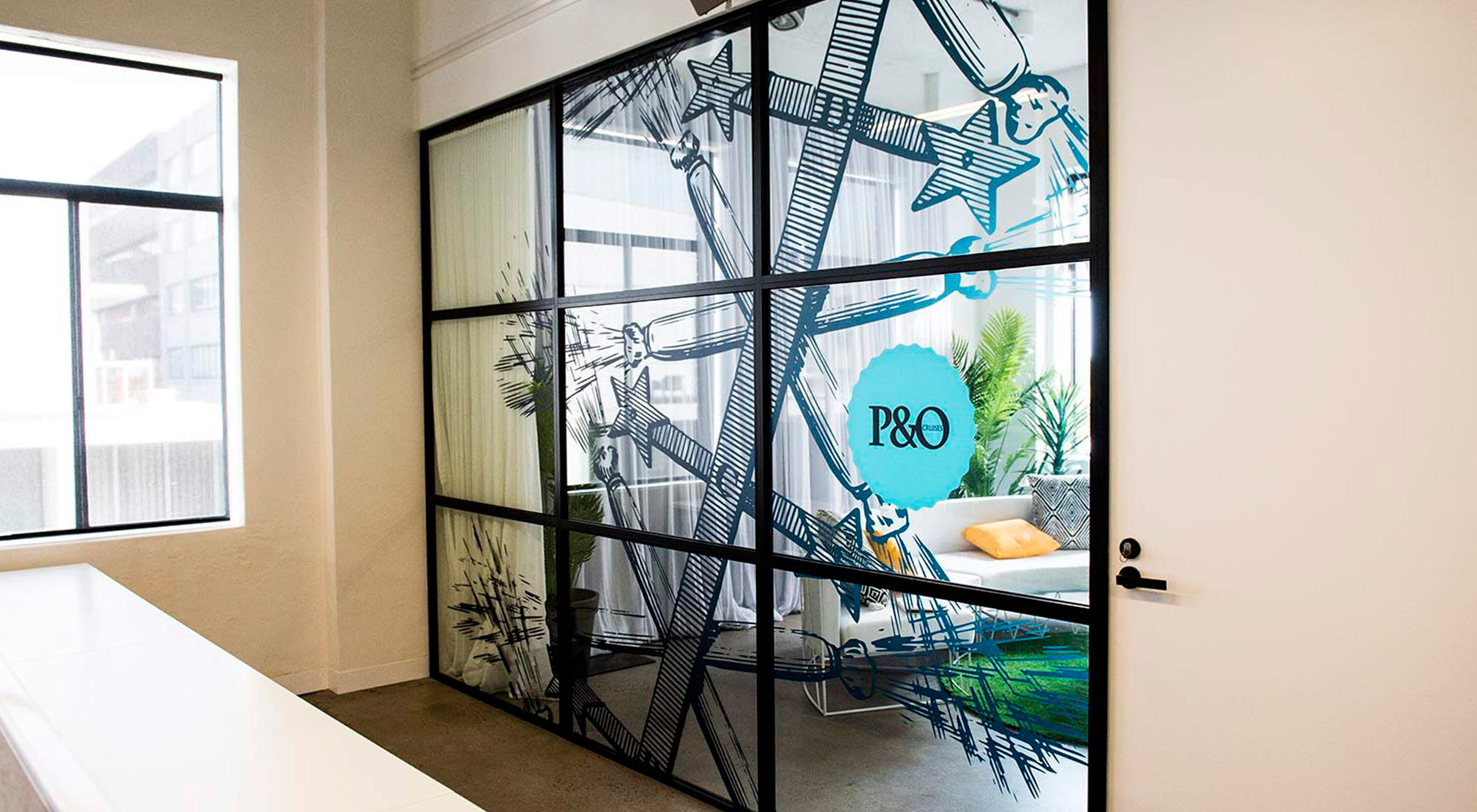
How Environment Graphics Extend Campaign Performance
Campaign materials work harder when the physical environment is part of the plan. A brochure delivers a message. A brochure supported by matching window graphics, floor decals and wall murals creates an experience that reinforces the message at every point of contact.
The challenge is coordination. When environment graphics are added late or produced separately from collateral, the campaign loses consistency at the point it matters most.
Why Printed Collateral Alone Is Not Enough
Collateral is designed to be picked up, read and kept. Environment graphics are designed to be encountered. They operate at a different scale, in a different context and for a different purpose. Floor decals guide movement. Window graphics attract attention from the street. Wall installations create atmosphere and reinforce brand positioning within a space.
When these elements are absent, the campaign relies entirely on what someone carries away. When they are present and aligned, the campaign surrounds the audience and builds recognition before the collateral is even opened.

Environment Graphics as a Conversion Surface
In retail environments, environment graphics function as conversion surfaces. A POS display at the counter reinforces the offer. A window decal draws foot traffic. A floor graphic directs attention toward a featured product.
In property marketing, environment graphics shape how buyers experience the project. Display suite graphics, feature walls and wayfinding signage influence perception before a brochure is opened or a floor plan is reviewed.
These elements convert passive attention into active engagement. But only when they are consistent with the printed collateral and produced to the same standard.
Coordination Risk When Display Is Added Late
Environment graphics are often treated as an afterthought. The campaign is planned around the brochure. The display components are scoped later, sourced from a different supplier, produced on a different timeline.
This introduces three risks. Colour shifts between the collateral production process and the wide-format display process. Timing misaligns because the display supplier was briefed after the collateral was already in production. Quality varies because the two suppliers apply different finishing standards.
The result is a campaign that looks coordinated on screen but fragmented in the physical space.

Aligning Window, Floor and Wall Graphics with Campaign Collateral
Coordination starts at file stage. When collateral and environment graphics are managed within one production workflow, colour is profiled across substrates before production begins. The brochure proof and the window graphic proof are assessed against the same brand standard.
At Carbon8, digital printing and large format production operate within the same facility. Die-cutting, lamination and mounting are managed alongside print production. This means a floor decal, a window graphic and a matching brochure are produced, finished and dispatched as one coordinated set.
For multi-site rollouts, this coordination extends to dispatch scheduling. Each location receives the complete set of materials rather than a staggered delivery from multiple suppliers.

Structuring Display Production Early
The most effective approach is to scope environment graphics alongside collateral from the outset. Identify which spaces need graphics. Specify substrates and installation methods. Map colour requirements across all formats.
A short conversation at campaign planning stage can prevent the late-stage scramble that produces inconsistent results. If your next campaign has any in-store, on-site or event component, structuring production early protects the outcome.