

Why Coordinated Print and Display Strengthens Campaigns
Many campaigns include both printed collateral and physical environment graphics. A property launch requires brochures and site hoarding. A retail activation combines catalogues with window decals and POS stands. A corporate event pairs printed materials with display boards and wayfinding signage.
When collateral and display are produced separately, the campaign looks it.
When Campaigns Extend Beyond Printed Collateral
The shift from print-only to print-plus-display happens naturally as campaigns grow. A brochure is joined by a pull-up banner. A presentation folder is supported by a wall graphic in the meeting room. A property brochure is accompanied by hoarding panels, display suite graphics and wayfinding signage.
Each addition extends the production scope. The question is whether that extension is managed as one coordinated workflow or fragmented across separate suppliers.

The Risk of Separate Print and Display Suppliers
Separate suppliers mean separate colour workflows. A brochure printed on an HP Indigo uses a different colour process than a hoarding panel printed on a solvent or latex wide-format press. Without deliberate alignment, the brand colour drifts between the two.
Separate suppliers also mean separate timelines. The brochure arrives on schedule. The hoarding is delayed by a week. The launch happens with incomplete materials and the campaign loses its coordinated impact at the point it matters most.
Proofing compounds the problem. Approving colour on a digital proof for the brochure does not guarantee the same result on a large format substrate. The processes handle ink, substrate and drying differently.

Aligning Collateral and Environment Graphics
Coordinated production starts at file stage. When brochures and wide-format graphics are managed within one workflow, colour profiles are aligned before production begins. Substrate differences are accounted for during specification, not discovered during installation.
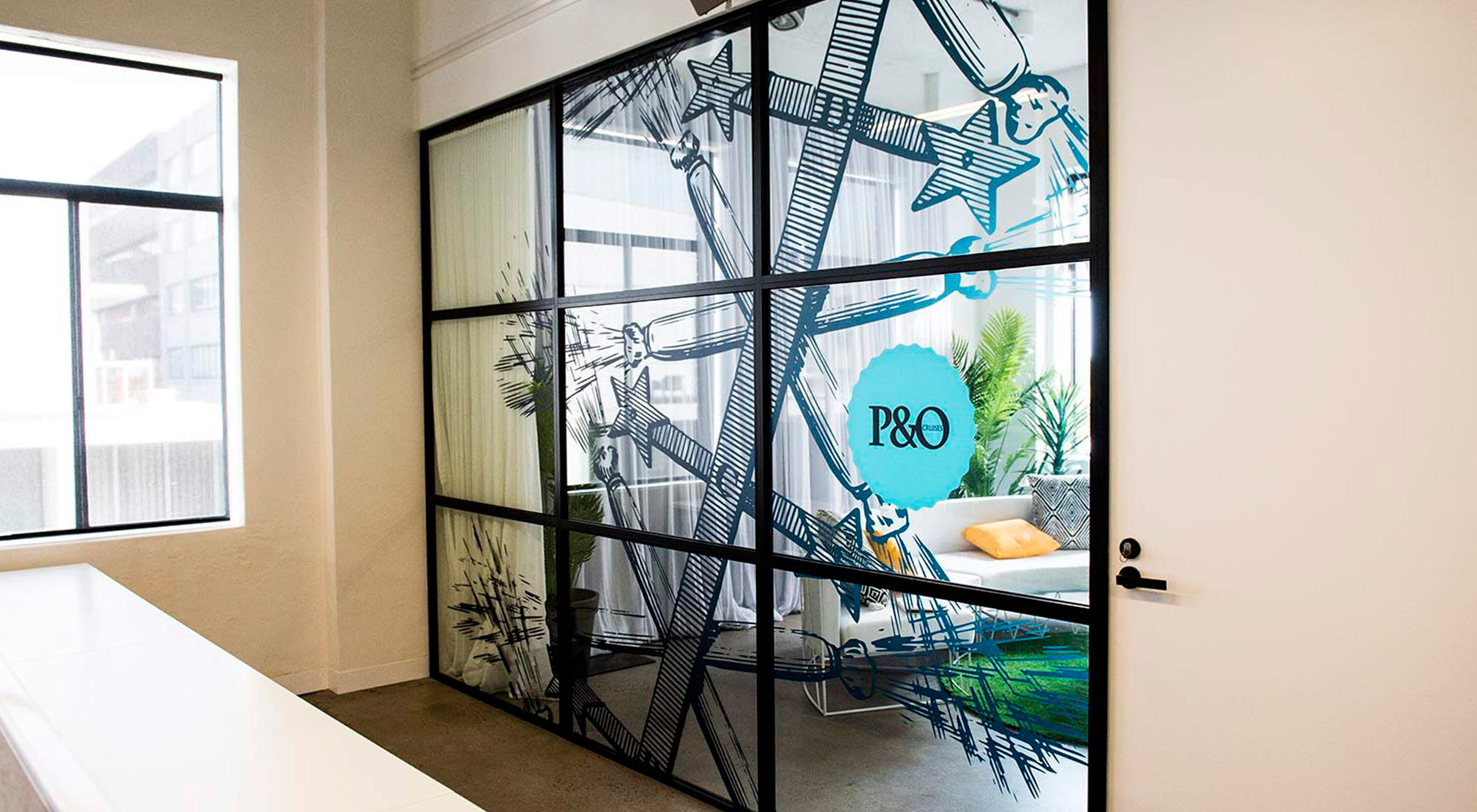
At Carbon8, digital printing and large format production operate within the same facility. Colour is calibrated across HP Indigo sheetfed output and UV flatbed, solvent, latex and aqueous wide-format processes. This means a brochure and a matching window graphic are produced against the same colour standard.
Scheduling is managed against one timeline. Brochures, window graphics, floor decals, display boards and hoarding panels are sequenced for coordinated delivery.
Colour Management Across Digital Print and Large Format
Colour consistency across formats requires deliberate specification. Different substrates absorb ink differently. A brand blue on a coated brochure stock will appear differently on an uncoated poster paper or a vinyl window film unless the colour profile is adjusted for each substrate.
We manage this through substrate-specific colour profiling and controlled proofing. The proof for the brochure and the proof for the hoarding are assessed against the same brand standard, with adjustments made for the behaviour of each output process.
For campaigns where brand colour is non-negotiable, this discipline is the difference between a coordinated visual presence and a collection of separately produced items that don’t quite match.
Structuring Multi-Format Rollouts Early
The most effective approach is to scope the full component list before any element enters production. Identify which items are digitally printed collateral, which are wide-format display, and which involve packaging or finishing. Map the colour requirements across formats. Build a production schedule that accounts for all components.
For property campaigns, this means coordinating brochures, finishes boards and hoarding from a single production plan. For retail activations, it means aligning POS displays, window graphics and collateral against the campaign launch date.
If your next campaign includes any environmental component alongside printed collateral, structuring production early protects the outcome.